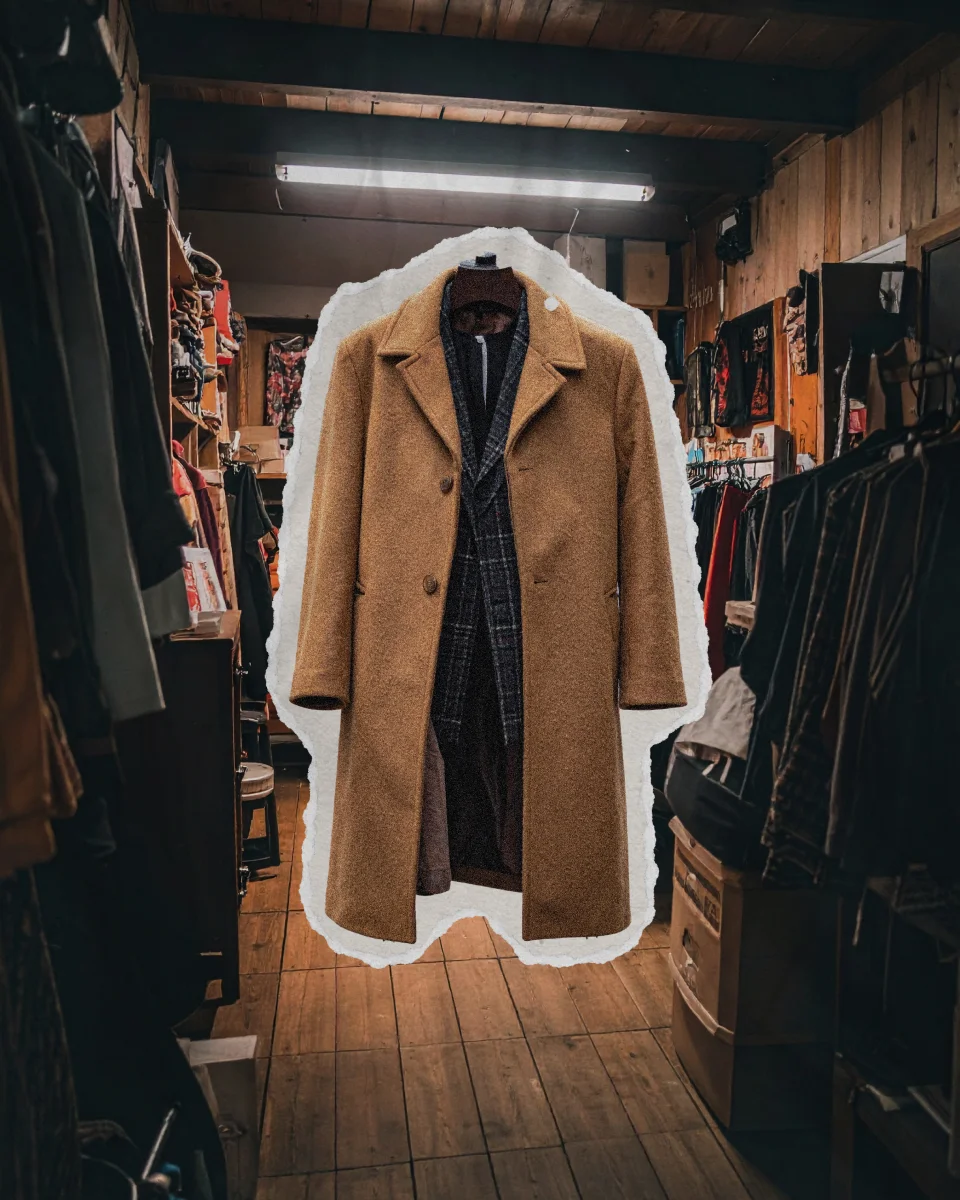

New year, new me – or at least, new intentions. Every January, many of us resolve to be more organised, more sustainable and a little less impulsive. As we’ve explored earlier at RethinkThings, the resolutions that actually stick tend to be the ones designed for real life, not radical overhauls.
Enter the capsule wardrobe. Often described as a fashion resolution that works, it promises fewer clothes, clearer choices and less waste without demanding perfection or a complete personality reset.
So what is a capsule wardrobe, where did the idea come from, and how do you build one that lasts beyond January optimism? Let’s take a closer look.
At its core, a capsule wardrobe is a small, curated collection of clothing that works together. The focus isn’t on owning as little as possible, but on owning pieces you actually wear and can combine easily.
Most capsule wardrobes range somewhere between 25 and 50 items, depending on lifestyle, climate and personal preference. That number usually includes everyday clothing and shoes, but excludes things like underwear, sportswear or that one outfit you keep ‘just in case I get nominated for an Oscar,’ or something like that.
The goal is not restriction for the sake of it. The goal is intentionality: fewer decisions, fewer impulse purchases, and a closet that reflects how you live and not how you imagine you might live someday.
The term ‘capsule wardrobe” first appeared in the 1970s, coined by London boutique owner Susie Faux. Her idea was practical rather than ideological: a wardrobe built around timeless, interchangeable pieces that could be updated seasonally without starting from scratch.
The concept resurfaced in the 1980s through designers like Donna Karan, whose ‘Seven easy pieces’ collection made the idea more mainstream. In recent years, capsule wardrobes have been embraced by minimalists, sustainability advocates and people who are simply tired of decision fatigue.
What’s changed is the context. Today, the capsule wardrobe is as much a response to fast fashion, overproduction and clothing waste as it is to personal convenience.
The fashion industry is one of the most resource-intensive industries in the world. Clothing production has roughly doubled in the last two decades, while the average number of wears per garment has declined significantly.
A capsule wardrobe addresses this imbalance in a quiet but effective way. By buying less – and wearing what you own more – you reduce demand for constant production. You also save time, money and mental energy.
There’s another, less obvious benefit: decision relief. Research shows that too many choices can lead to decision fatigue, making even small decisions feel overwhelming. A smaller wardrobe reduces that daily cognitive load, which is why many people report feeling calmer, (and not deprived) after switching to a capsule approach.
Before we get to the ‘how,’ it’s worth clearing up a few misconceptions. A capsule wardrobe is not:
It’s also not about perfection. A capsule wardrobe evolves. It responds to seasons, lifestyle changes and the occasional fashion whim, sure. The difference is that those changes are intentional, not impulsive. Now that you’re up to speed, let’s start building!
1. Start with how you actually live
Before touching your clothes, look at your life. How do you spend your days? Office, home, outdoors, social, somewhere in between?
A capsule wardrobe should reflect reality and not – this is important – aspiration. If you work from home, three blazers probably don’t earn their keep. If you cycle everywhere, delicate trousers may not be your best ally. This step actually matters more than trends or colour palettes.
2. Audit what you already own
Pull everything out. That’s right: everything! This is less about Marie Kondo joy and more about data. As you sort, ask:
Keep the pieces that pass these tests and set aside items that don’t. Not necessarily to discard immediately, but to evaluate honestly. You may be surprised how much of your capsule wardrobe already exists.
3. Define your core pieces
Most capsule wardrobes revolve around a core set of neutral, versatile items. Think trousers, jeans, skirts, layers and shoes that work together without much effort.
Neutral doesn’t have to mean boring. It simply means colours and shapes that play well together. Black, navy, denim, beige, grey, or your own more colourful version of these.
These pieces form the backbone of your wardrobe. They’re the ones you reach for without thinking.
4. Add personality
This is where many capsule wardrobes fail: by becoming too sensible. A functional wardrobe still needs personality. This can show up in colour, texture, accessories or statement pieces. The key difference is that these items are chosen deliberately, not accumulated accidentally.
If a piece makes you feel good and works with the rest of your wardrobe, it belongs. Even if it’s bright, bold or slightly impractical (hello jumpsuit).
5. Fill the gaps slowly
Only after wearing your capsule for a while will gaps become obvious. Maybe you’re missing a warm layer. Maybe you need better shoes. Or maybe everything works except one awkward colour.
This is the moment to shop. Shop slowly, thoughtfully, second hand (!) and with a clear purpose. A capsule wardrobe discourages impulse buying because every new item has to earn its place.
The biggest surprise for many people is how freeing a capsule wardrobe feels. Fewer clothes often lead to more outfit combinations, simply because everything works together.
It also changes how you shop. When you know what you own and why you own it, trends lose some of their urgency. You start asking better questions: Will I wear this often? Does it fit my life? Does it replace something or just adds noise? And remember: the best capsule wardrobe isn’t the smallest one, it’s the one you actually wear. That shift, over time, is where the sustainability impact really lives.
Good luck! May your outfits be repeatable, your purchases intentional, and your wardrobe finally on your side.

Florine started out as an art critic, but that turned out to not be quite her thing. So, she did what any sensible person would do - packed her life (and family) into a tiny campervan and roamed the planet for seven years. Now back in the Netherlands, she’s juggling life as a strategic advisor for a Dutch non-profit, while also writing for magazines and platforms. When she’s not typing away, you’ll probably find her treasure-hunting at thrift stores to jazz up her tiny house by the sea. Or wandering outdoors, because apparently sitting still isn’t really her vibe.
Subscribe to the monthly mindshift
Our very best, every month in your mailbox. Subscribe now and join the reloved revolution!