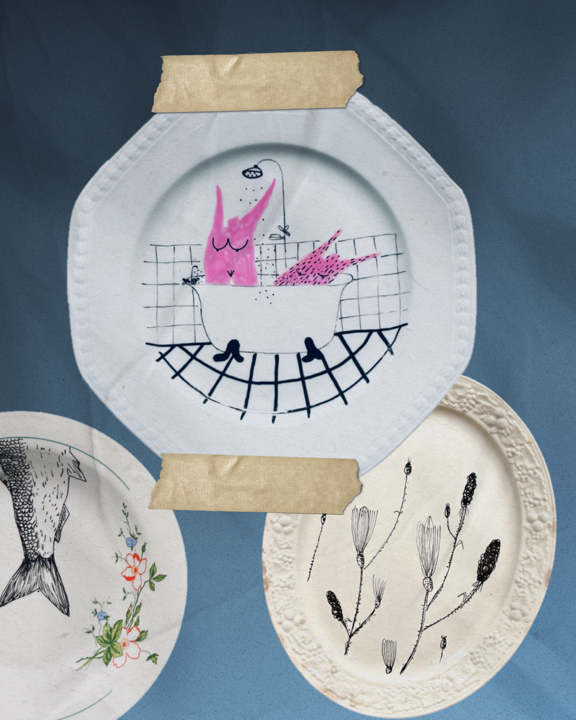
Arent Plates decorate the walls of elegant restaurants, cozy bookshops, exhibition spaces, and everyday homes. The work of the Poznań-based artist has travelled far — from Spain to the United States — before coming back home. The plates are decorative, yes. But if you stop and really look, the plates tell stories about emotions, nature, and the quiet sensitivity of everyday life.
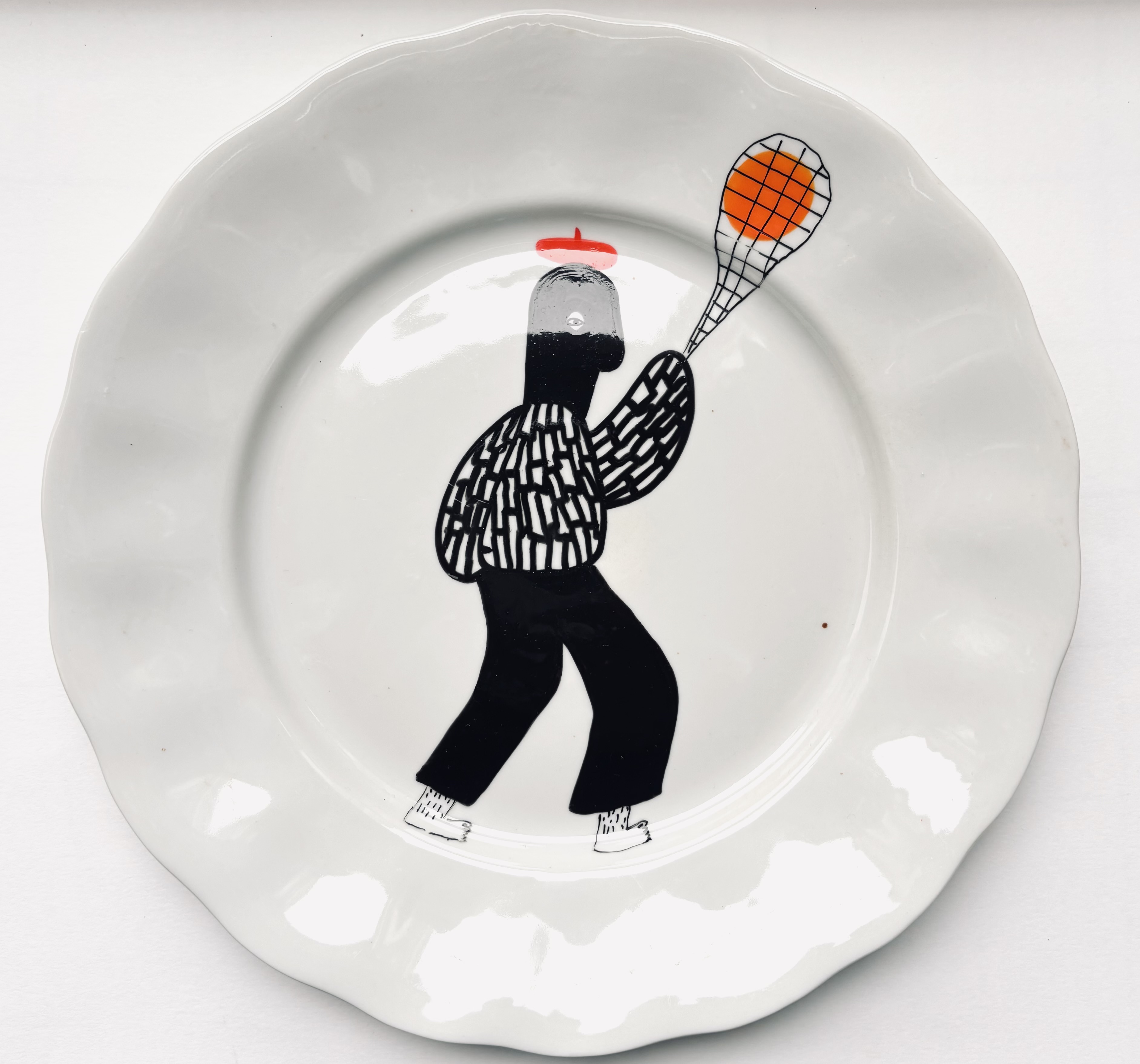
“At first, the plates lived a proper life,” Joanna tells me. “Food was served on them. They were present during everyday meals and special occasions. Those that were no longer needed, and somehow found their way to me, become my canvas. Once I paint on them, they stop being plates in the literal sense — you can’t eat from them anymore. But they remain functional objects, just in a different role.”
In Poland, there is no shortage of plates. Solid ones. Real porcelain. This stems back from times when every home had at least two full sets: one for everyday use, one for celebrations. Tableware from factories like Ćmielów, Lubiana, or Chodzież were carefully crafted, often hand-decorated. Over time, for many reasons (smaller apartments, changing habits, tighter budgets) these sets were replaced by cheap, mass-produced alternatives made from low-quality materials.
.jpeg)
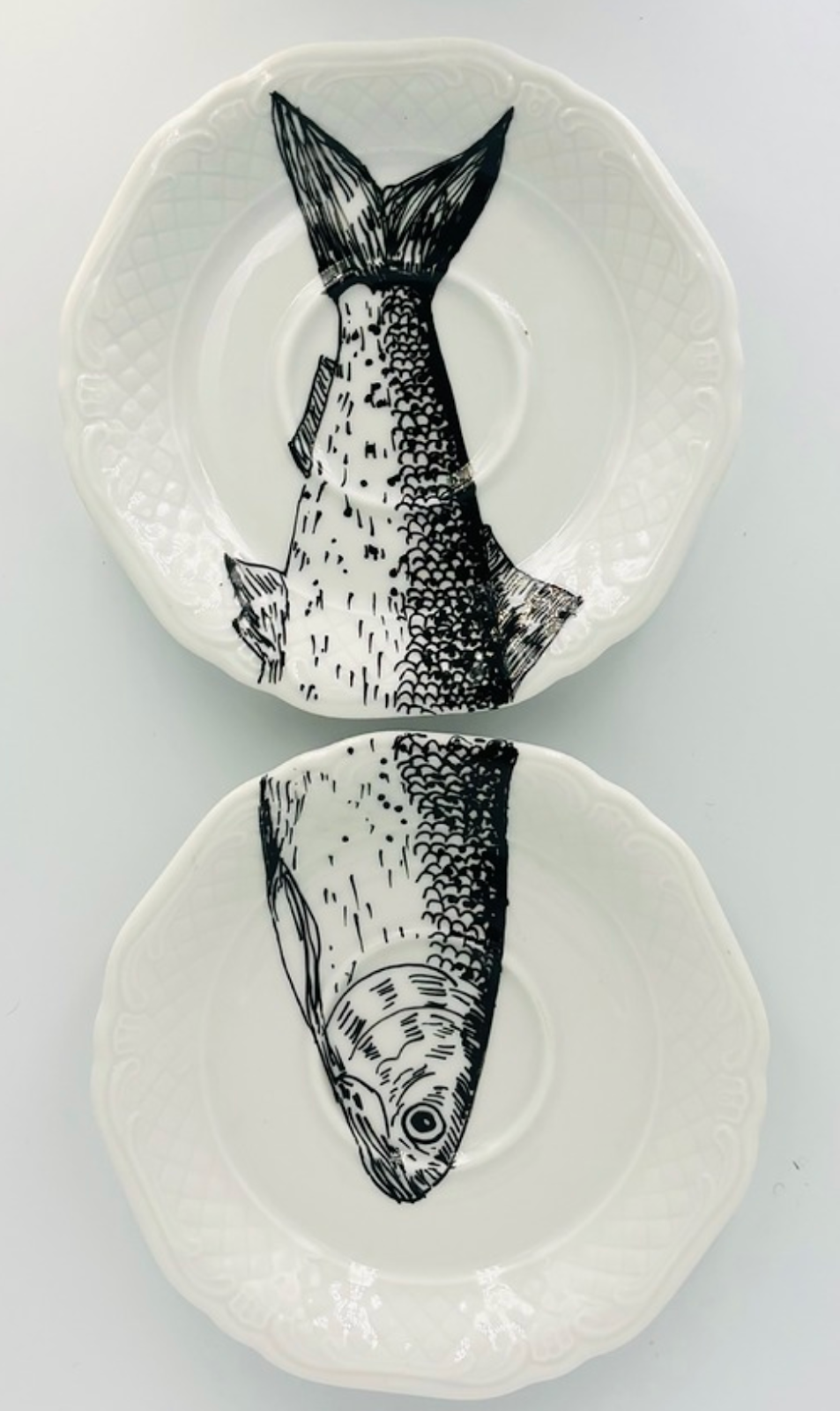
Joanna’s studio receives all kinds of plates. Elegant Rosenthal pieces. Orphaned Villeroy & Boch dessert plates. Anonymous, mismatched, chipped platters. Some arrive by post. Others are found at flea markets, second-hand shops, or on OLX (a secondhand online marketplace). Their history matters less to her than the way the porcelain behaves under the brush: its colour, its shade, whether it has cracked — and if it breaks, whether it can be put back together.
She tells me about a plate she once discovered in a shared studio in Poznań, used by designers and makers from all over the world.
“It must have broken,” she says, “because someone repaired it using kintsugi*. I was deeply moved. The plate that I had painted had been given another life once again!”
*Kintsugi is the Japanese art of repairing broken pottery with lacquer mixed with powdered gold or other precious metals.
The studio Joanna mentions, VZORY, is located in the historic heart of Poznań — a city known for its appreciation of restraint, order, and not wasting resources. For me, the meeting point of Japanese repair philosophy and the local values of the place where Arent Plates are created becomes a key to understanding her work.
Because what Joanna paints is often about imperfection. About freedom from judgement. About bodies, love — or the absence of it. The figures on her plates live their own lives. Sometimes they run freely across the plate’s surface: headless, yet deeply physical. Arms and legs move so expressively you almost worry they might fall off the edge. But they don’t seem concerned. They are too busy dancing, bathing, resting.
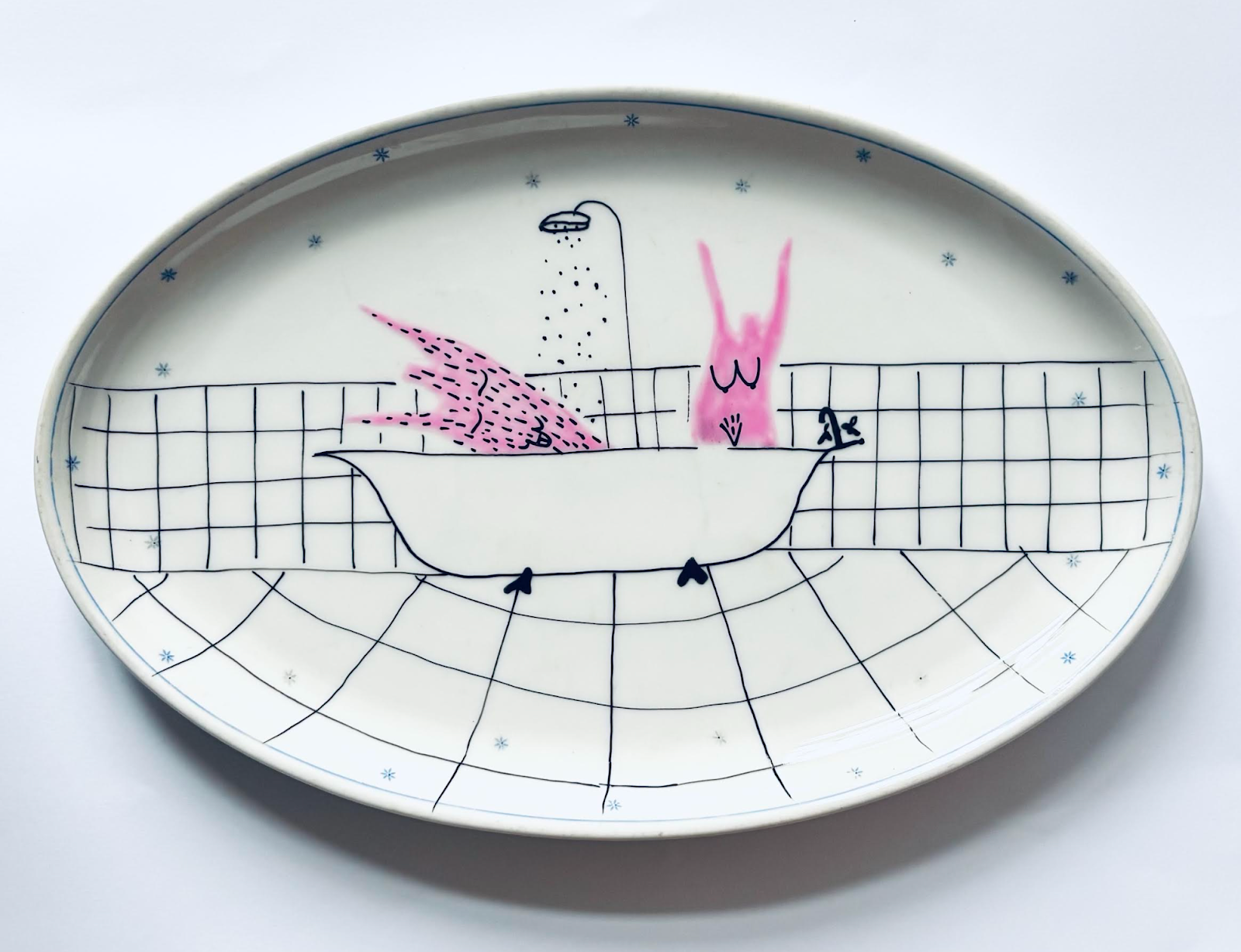
One of my favourite plates shows a carefree, headless couple in the shower. The inscription reads: A clean body is a clean mind. Please, save water!
I ask Joanna if this suggests that we can’t live in harmony with nature until we live in harmony with ourselves.
“I don’t know,” she says. “I prefer to leave interpretation to others. But I do believe in not giving up on trying to make the world a better place — for everyone, including ourselves. In choosing consciously. In giving meaning to people, situations, relationships. I won’t save all the plates that are meant for the trash. But that doesn’t mean it’s not worth trying.”
“Saving plates?” I ask.
“Why not?” she smiles. “They deserve it. Sometimes I realise I’ve grown emotionally attached to my work. At an art fair, I suddenly don’t want to sell a plate someone is interested in — because I like both the object and the story it carries. Sometimes I even go home and make a copy, just to spend a little more time with that story before letting it go.”
She pauses. “Objects matter. We give them meaning. And they can shape us just as much as we shape them.”
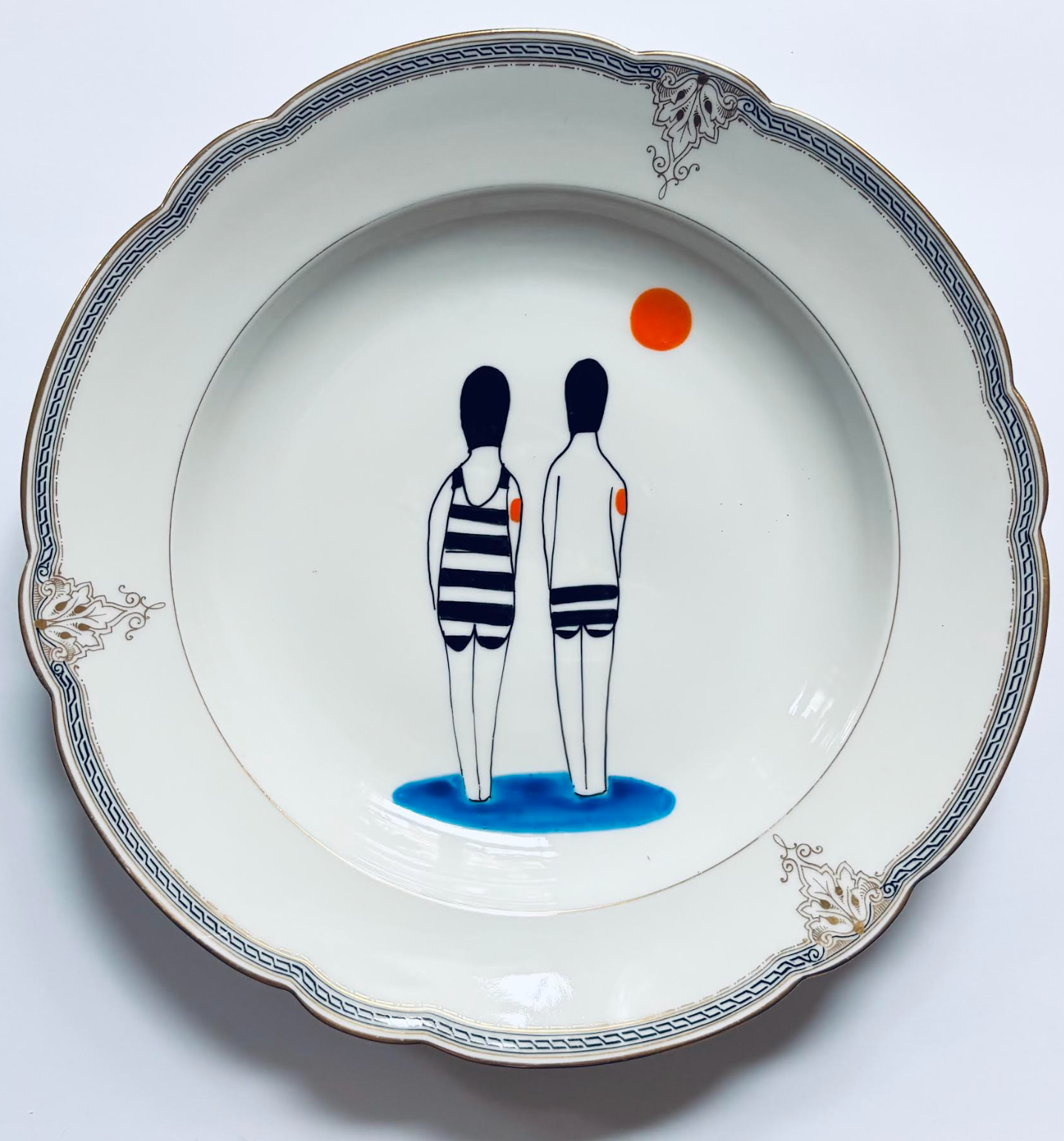
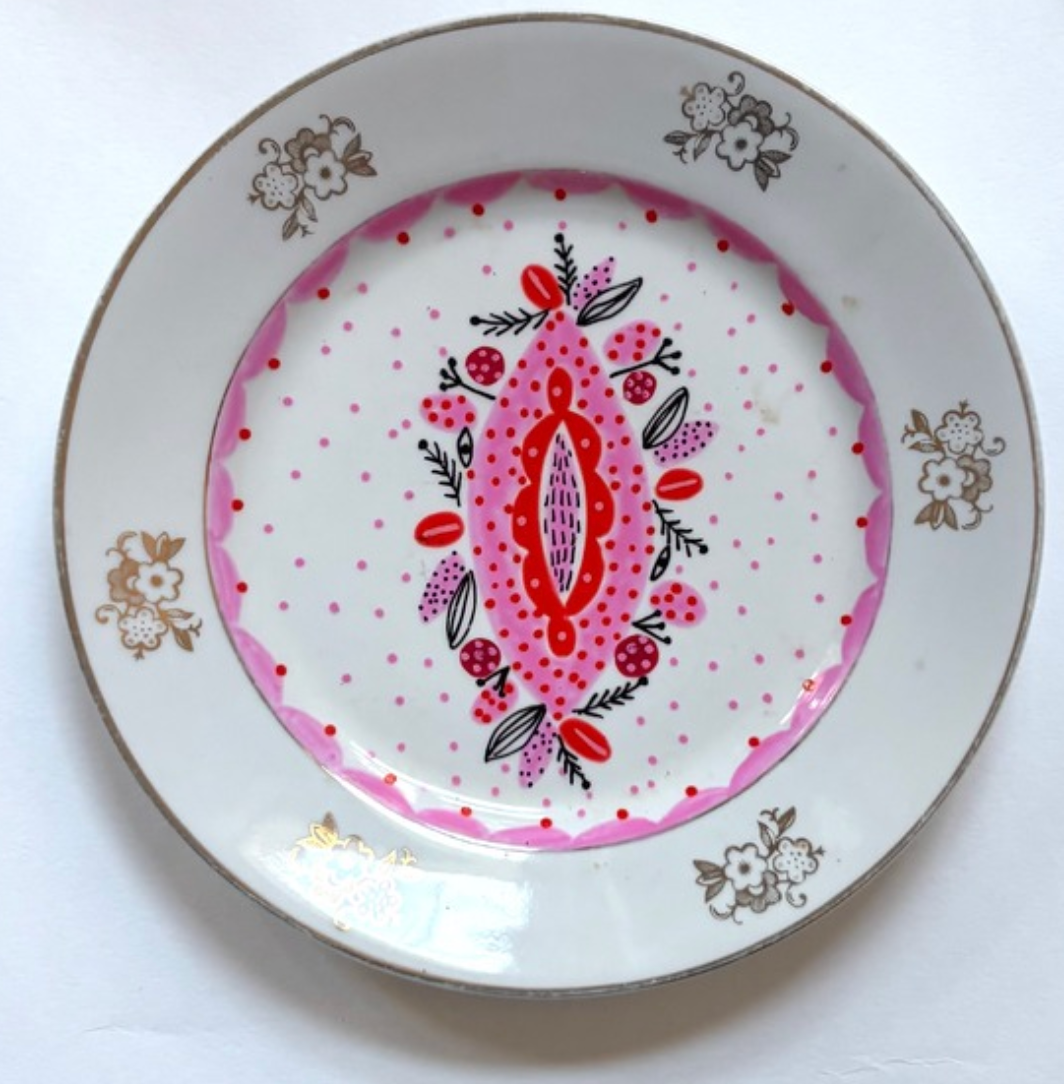
I keep thinking about this duality. Plates are among the most practical objects we own. We use them every day, without thinking much about them. And yet, at a time when things are valued only briefly — replaced as soon as something newer appears — Arent Plates take a different path. Once their everyday function is interrupted, they are allowed to become something else. Fragile and resilient at the same time. Like porcelain.