

Public charging: making sense of charging cards, apps and tariffs

Public EV charging should be simple. Park, plug in, pay and leave. In practice, your first encounter with a public charger may involve an unfamiliar logo, several payment options and some uncertainty about which one to use.

The good news is that you do not need an account with every charging company in Europe. You do, however, need to understand one slightly confusing fact: the company operating the charger is not necessarily the company selling you the electricity. Once that distinction makes sense, most of the charging-card puzzle does too.

If your main question is where to charge when you cannot plug in at home, our guide to charging an EV without a driveway covers that in detail. Here, we are looking at what happens after you have found a public charger: how you access it, who sets the price and who eventually sends the bill.

The short version

You do not need a separate charging card for every public charging network. One card or app can often provide access to chargers operated by several companies through roaming. However, the price may depend on how you start the session: paying through the operator, a roaming service or a subscription can produce different rates at the same charger. For most drivers, one main charging service and a broad pay-as-you-go backup should be enough.
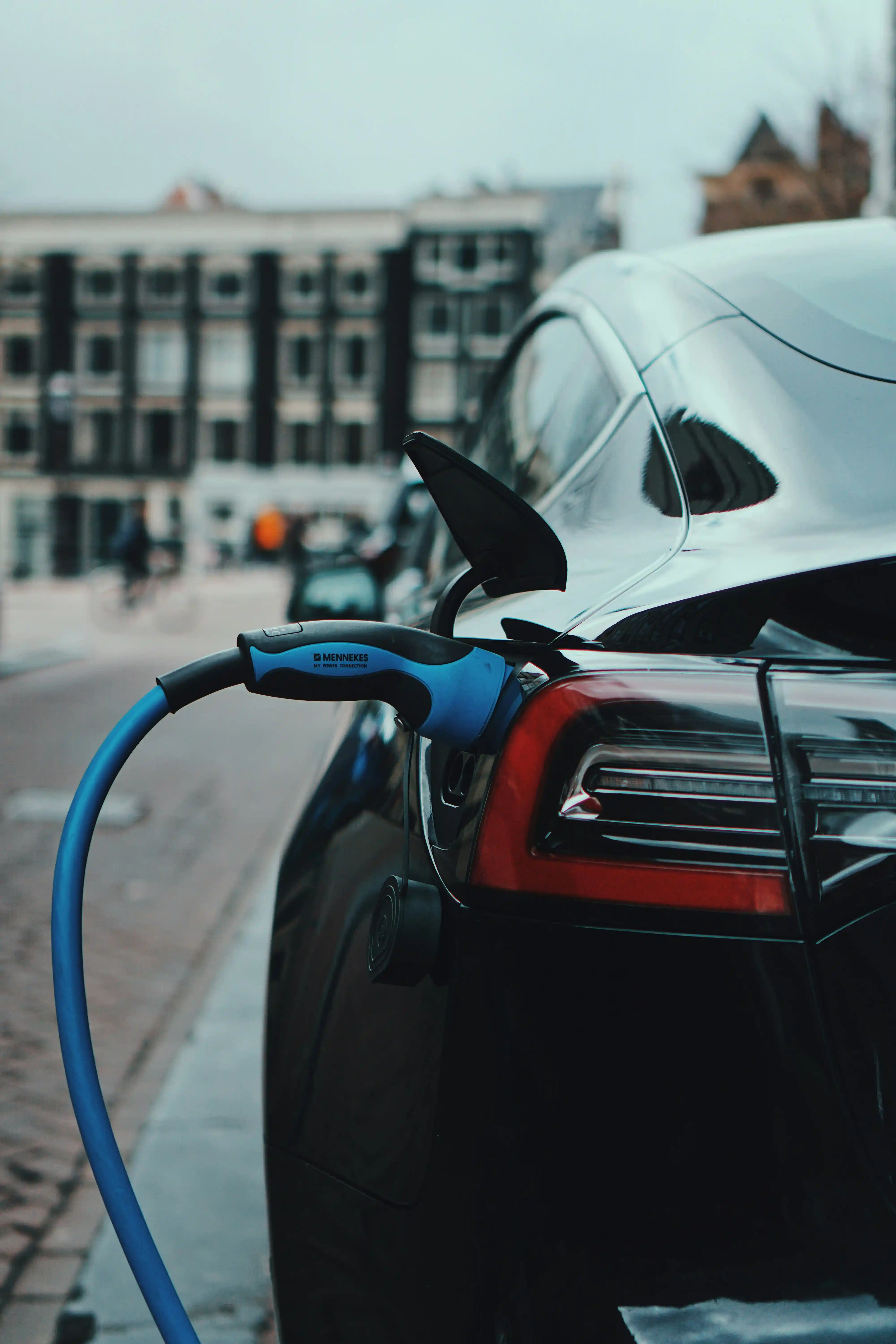

Two drivers can use the same charger at the same time and pay different prices for each kilowatt-hour.

First, meet the two companies at the charger

At a petrol station, the company name above the forecourt, the price on the sign and the name on your receipt generally belong together. Public EV charging can involve more layers. The charge point operator, often shortened to CPO, operates the physical charger. It installs and maintains the equipment, keeps the charger online and usually sets the price for charging directly through its own service. The e-mobility service provider, or eMSP, supplies the service you use to start and pay for charging. This may be a charging card or app. It collects payment from you and settles the transaction with the operator.

Sometimes one company performs both roles. In other cases, your eMSP gives you access to chargers run by many different operators. That arrangement is called roaming. It is the reason one charging card can work across multiple networks, including networks whose names you have never seen before.

In practical terms, the charger provides the electricity, while your charging service provides the access and the bill.

One charger does not always mean one price

Roaming is convenient, but it does mean you may get a different price than the person charging their car next to you. The operator may offer one price through its own app, while another charging service applies its own tariff or adds a roaming fee. Two drivers can therefore use the same charger at the same time and pay different prices for each kilowatt-hour.

Charging prices can contain several elements. The most obvious is a price per kilowatt-hour, or kWh: the amount of electricity delivered to the battery. There may also be a fixed fee for starting a session, a time-based charge, a roaming surcharge or an occupancy fee if the car remains connected after charging has finished. Parking charges may apply separately. The European Alternative Fuels Observatory explains that both pay-as-you-go and contract-based tariffs can combine electricity, time and session fees. This is why the large number on the screen is not always the only number worth checking.

Time-based fees are not necessarily there to catch you out. At busy rapid chargers, they encourage drivers to move the car once the battery is sufficiently full. Charging usually slows considerably as the battery approaches 100%, so occupying a rapid charger for that final stretch can leave the next driver waiting while very little electricity is being added. Think of drinking an espresso at a packed café, keeping the last table occupied for two hours.

Must you download an app before receiving electricity?

No, not always. There are several common ways to start a public charging session:

  • Hold a charging card against the reader
  • Start the session through an app
  • Scan a QR code and pay online
  • Pay directly with a bank or credit card
  • Use Plug & Charge, if both the car and charger support it

A charging card is often the least fiddly option, especially when mobile reception is weak. An app can be useful for checking availability, viewing the live tariff and following the session remotely. Direct card or QR payment is helpful when you rarely use that particular network and do not want another account.

Under the EU’s Alternative Fuels Infrastructure Regulation, drivers must be able to use publicly accessible chargers on an ad-hoc basis without entering into a long-term contract. The regulation also introduces payment and price-transparency requirements, particularly for newly installed chargers. Exactly which payment method you encounter can still depend on the charger’s power, installation date and location, so carrying a broadly accepted charging card remains a useful backup.

Plug & Charge removes another step. If both the car and charger support it, you simply plug in. The charger recognises the car automatically and bills the charging account you have previously linked to it, so there is no need to open an app or tap a card. It is pleasingly close to how people assumed charging already worked. The system is becoming more widely available, but it does not yet work with every car, charger or charging provider. The price depends on the charging plan connected to your car.

Public charging becomes much less mysterious once you know which layer you are looking at.

The subscription question

Some charging services are free to join and simply charge for each session. Others offer a monthly or annual subscription in exchange for a lower charging rate. A subscription can make sense for someone who frequently uses the included networks, particularly for rapid charging. For someone who needs that network once during an annual holiday, the fixed fee may cost more than it saves.

Fortunately, this does not require advanced mathematics. Estimate how many kilowatt-hours you expect to buy from that network each month. Multiply that amount by the discount per kWh. If the savings are greater than the subscription fee, the plan may be worthwhile. If not, pay-as-you-go is probably the better fit. For example, a subscription costing €10 per month with a discount of €0.10 per kWh only breaks even after 100 kWh of charging. Below that point, you are paying for the privilege of paying slightly less.

Do check what the subscription actually covers. A lower rate may apply only to one network, one charger type or one country. Providers can also change their coverage and prices, so this is a calculation to repeat occasionally rather than a decision to frame and hang on the wall.

How many cards do you really need?

Probably fewer than you fear. There is no single ideal setup for every driver, but a sensible approach is to choose one service that works well on the networks you use most, then keep a broad roaming option without a fixed subscription as a backup. If you regularly rapid-charge with one operator, its own app or subscription may offer the best rate. If you mostly charge at home and use public chargers occasionally, a no-subscription roaming card can provide flexibility without charging you during the eleven months it sits in the glovebox. Ad-hoc payment provides another fallback where it is available.

Before starting a session, check the full tariff shown in the app or payment method you intend to use, including any session, time or occupancy fees. Once you have chosen a charging card, keep it in the car rather than in the coat you decided not to bring. Apps are convenient; a small piece of plastic is remarkably good at not losing mobile reception.

Before you press start

Public charging becomes much less mysterious once you know which layer you are looking at. The logo on the charger tells you who operates it. The card or app tells you who is selling the session to you. Roaming connects the two, and the card, app or subscription you use determines what appears on the bill.

You do not need to memorise every provider or sign up for every subscription. Choose a convenient main option, carry a broad backup and check the full price before starting. The charging market will keep changing, but those three habits should remain useful even after today’s apps, cards and tariffs have been replaced by the next set.

Know someone who deserves to be celebrated?

We're always looking for the next generation of pioneers. If you know someone doing extraordinary work, in food, fashion, design, or beyond, tell us about them.

Nominate a Pioneer
Stay in the loop

Join the revolution.

Our very best stories, insights and alternatives to overconsumption, every month in your mailbox. Subscribe now and join the reloved revolution!