A world without waste isn’t some distant dream

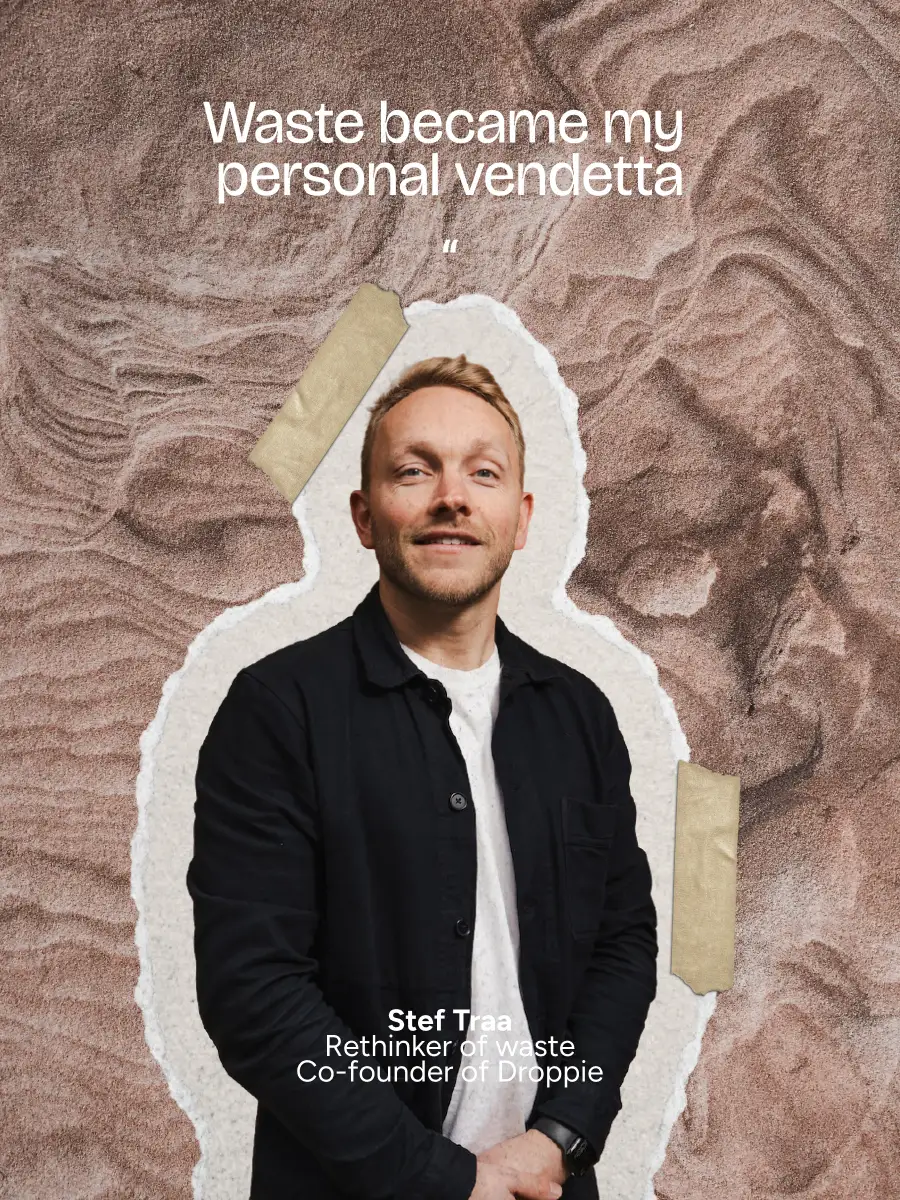
When cycling through a city, most people barely notice the overflowing containers, discarded mattresses or abandoned appliances on the pavement. Stef Traa sees lost value.

Together with Natascha Hermsen, he founded Droppie, a rapidly growing chain of recycling stores that aims to make recycling easy, rewarding and even enjoyable. In just over a year, the company expanded from a single pilot location in Amsterdam to multiple stores across the Netherlands. But according to Traa, the real challenge is not collecting waste, but changing human behaviour.

Let’s begin at the beginning. What kind of kid were you growing up?

‘I was adventurous, full of energy, somewhat impatient as well. I spent most of my time outside.I always wanted to discover new things and explore new opportunities. Looking back, that pioneering spirit was already there quite early.

I also knew fairly young that I wanted to become an entrepreneur. Or at least an adventurer. Before Droppie, I worked at several startups, which turned out to be a great learning school. This is my first company as a founder, but certainly not my first entrepreneurial journey.
"I wanted to stop complaining and start building a solution."

Sef Traa

Before Droppie, you worked in the world of plant-based food. How did you end up working in waste instead?

I've always been interested in businesses that create positive change. At Redefine Meat, a company that makes plant-based meat, that meant helping people make different food choices. I'm vegetarian myself, so that mission really resonated with me. I helped launch the company in multiple countries and it was an incredible experience.

What fascinated me wasn't just the product itself, but the question behind it: how do you get large groups of people to change their behaviour? That's actually a theme that runs through everything I do.

Waste became something much more personal. I would cycle through Amsterdam and constantly saw cardboard boxes, discarded furniture and mattresses left outside. Then it starts raining and suddenly materials that could have been reused or recycled lose all of their value. I genuinely struggled with that.

I grew up in an environment where people took much better care of their surroundings. So I kept wondering: how can we live in such a beautiful city and treat our environment this way? At some point I realised I wanted to stop complaining and start building a solution. Waste became a personal vendetta for me.

At what point did you realise there might actually be a business opportunity here?

Together with my co-founder Natascha Hermsen, I started digging deeper into the question of why people don't recycle more. We spent a lot of time talking to consumers and quickly realised that people weren't unwilling to recycle but simply overwhelmed by the system.

At first we thought we'd build an app that would reward people for recycling properly. But the more conversations we had, the more we realised the problem was much bigger than that. Information is fragmented, collection points are spread across cities and the entire experience is confusing for consumers.

That's when we started seeing an opportunity to redesign the experience from the consumer's perspective. That was the start of Droppie.

So what is Droppie exactly?

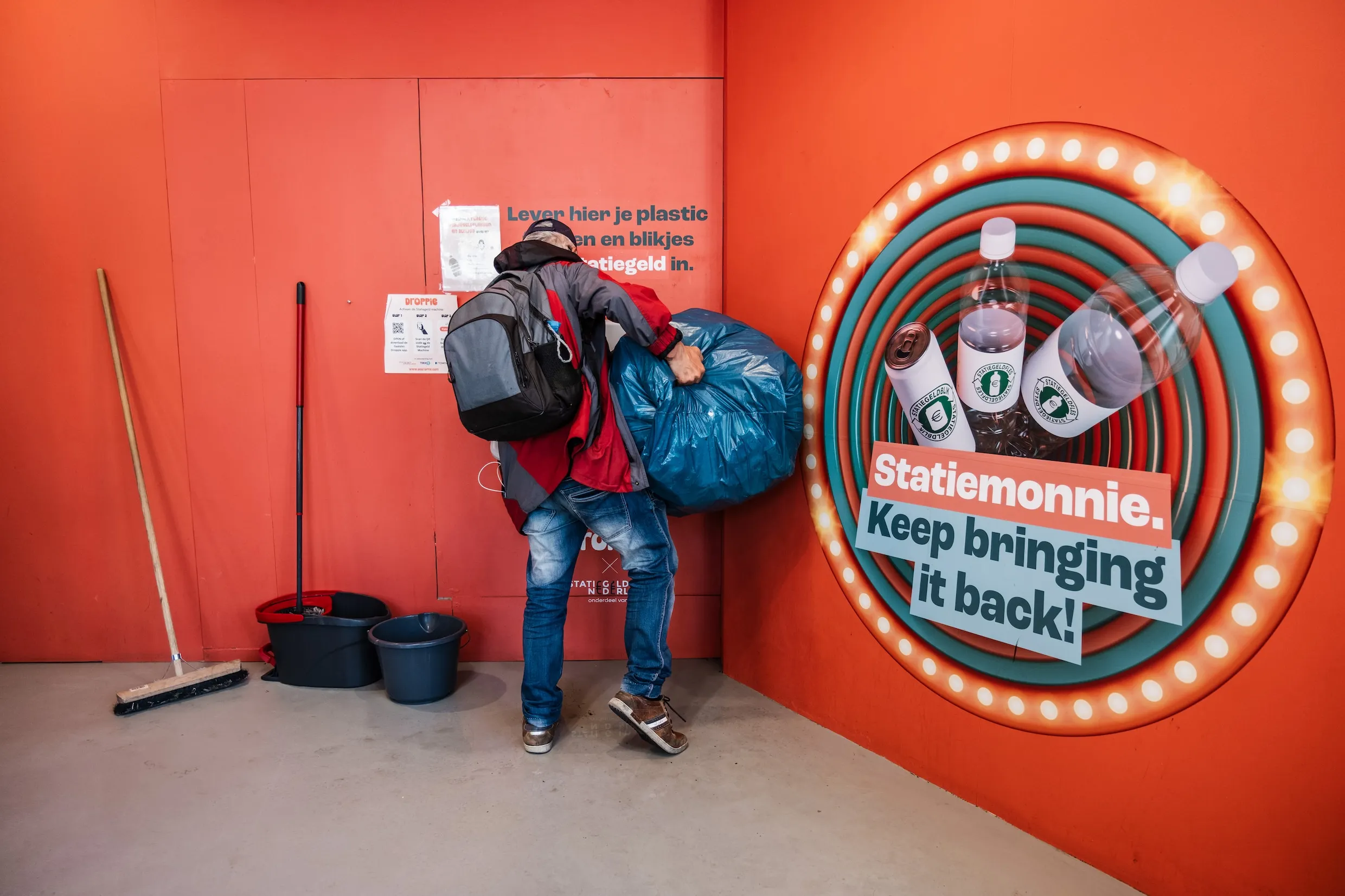
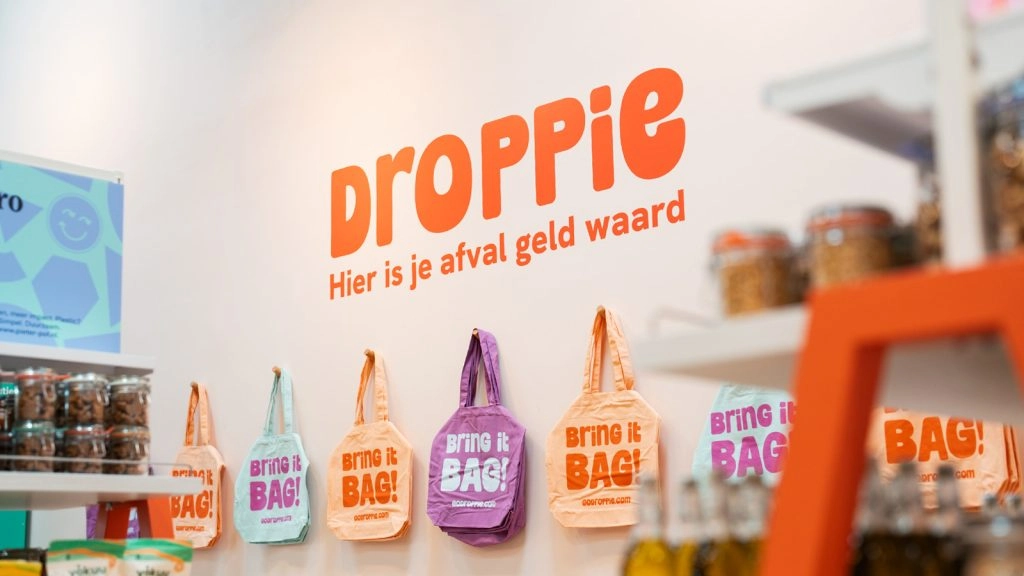
Droppie is a recycling store that makes it easy to get rid of things you no longer use. Instead of driving to different collection points for textiles, electronics, plastic packaging or deposit containers, you can bring everything to one place.

The idea behind Droppie is simple: most of what we throw away still has value. Old clothes can be reused, electronics can be repaired or recycled, and materials that would otherwise end up as waste can get a second life.

When you hand something in, you receive a small reward through the Droppie app. You can keep it yourself, donate it to a good cause or contribute it to a local community initiative.

"The is very little recognition or reward for people who were making an effort."

Sef Traa

What problem did you discover once you started looking into recycling?

The biggest surprise was that people weren't refusing to recycle but just didn't know where to start. We spoke to hundreds of consumers and kept hearing the same thing: the whole thing is just so confusing.

If you want to do it properly, you often need to visit multiple locations at the outskirts of the city, impossible to reach without a car. Deposit items go to one place, electronics to another, textiles somewhere else. Information is scattered across different websites and organisations. People genuinely want to do the right thing, but the system isn’t designed around them.

And then there's the incentive problem. Whether you carefully separate your waste or throw everything together, you still pay the same waste tax. We felt there was very little recognition or reward for people who were making an effort. There was an opportunity there.

So how did you find out whether people would actually use a solution like Droppie?

At first we thought technology would solve the problem. We imagined an app that would reward people for recycling properly. But pretty quickly we realised that software alone wasn't enough. People needed a physical place where everything came together.

So we opened a small pilot location in Amsterdam called Droppie, which looked like a lab. It wasn't part of some grand growth plan. We simply wanted to see if people would show up.

The response exceeded every expectation we had. Within a few months, thousands of people had visited the location. We were seeing hundreds of visitors a day bringing in materials. There was a real appetite for a simpler, more rewarding way to recycle.

Many people probably had questions about the concept in the beginning. How was Droppie received when you first launched it?

We were definitely the new kid on the block. Municipalities, recycling companies and other partners all had questions. That's understandable, we were proposing a different way of approaching something that had been organised more or less the same way for years.

At the same time, we quickly saw enthusiasm from consumers. Visitors understood the idea immediately. They liked having one place where they could bring different materials and they appreciated being rewarded for making the effort.

What happens to the materials once they're collected?

We currently collect around twenty-five different material streams. Depending on the material, we work with specialised partners who either recycle or reuse them.

Whenever possible, we prioritise reuse over recycling. Around 85 percent of collected textiles, for example, can be reused. Electronics and data carriers can often be refurbished or repurposed. Our goal is to keep materials in circulation for as long as possible.

"Our experience has been that people are happy to take an extra step, as long as you make it easy and enjoyable."

Sef Traa

Technology plays an important role in Droppie. How are you using AI?

One of the most interesting challenges has been figuring out how to apply AI in a physical retail environment. When people bring materials into a Droppie store, they scan a QR code with the Droppie app and our system uses image recognition to identify what they're handing in.

The Dropbot as we call it can distinguish plastic packaging from textiles and e-waste. It recognises, weighs and rewards you. All in a matter of seconds. And this is just the beginning of what we could do.

The nice thing is that it works for people of all ages. It's an intuitive system of dropping your materials. That's always the goal.

What have you learned about human behaviour since launching Droppie?

I think many people underestimate how willing consumers are to be part of the solution. People often assume that recycling is something nobody wants to do, but that's not what we've seen.

Our experience has been that people are happy to take an extra step, as long as you make it easy and enjoyable. That's why we put so much thought into the experience. Our stores are bright and welcoming and located conveniently, people receive rewards and can participate in lotteries. We wanted recycling to feel positive rather than a chore. Ultimately, people want to contribute. The system just needs to make participation simple.

What has building Droppie taught you about yourself?

Probably that I'm more stubborn than I realised. Once I become convinced that something can be done better, it's difficult for me to let go.

There were plenty of moments when people questioned the concept. We were a new player entering a fairly traditional sector. But hearing the same frustrations when talking to consumers over and over again, gave us confidence to keep going. I've learned that persistence matters. Sometimes you have to keep pushing even when the solution isn't obvious yet.

Know someone who deserves to be celebrated?

We're always looking for the next generation of pioneers. If you know someone doing extraordinary work — in food, fashion, design, or beyond — tell us about them.

Nominate a Pioneer
Stay in the loop

Join the revolution.

Our very best stories, insights and alternatives to overconsumption, every month in your mailbox. Subscribe now and join the reloved revolution!