
The vacation CO2 ladder: more vacation, less carbon emissions

Trying to travel more sustainably this year? Good instinct. But what is ‘sustainable travel’ in practice? Does it mean skipping flights? Sleeping in a tent? Cycling to Spain? Never leaving home again? Not quite.

The truth is simpler: holidays exist on a spectrum. Some trips come with a carbon footprint the size of a small meteor strike, others barely register. Most sit somewhere in between. So instead of asking whether your trip is good or bad, it makes more sense to ask: where does it land on the vacation CO2 ladder?

From long-haul luxury escapes to local staycations, here’s how different trips compare and which upgrades make the biggest difference.

Arun Prakash via Unsplash

6. Long-haul flight + resort holiday

Picture this: you leave grey skies behind and step off the plane into thick, tropical air. Within an hour, you’re lying by a pool somewhere in Thailand, Mexico or Indonesia, sipping something cold, with palm trees doing their best to impress you. Tomorrow: buffet breakfasts, infinity pools, maybe a massage. The day after that? More of the same.

Estimated footprint:
2.000 - 4.000+ kg CO2 per person

Most of that footprint is locked in before you even arrive, by the way. Long-haul flights are carbon-intensive by nature. Add air-conditioned hotels, pools, daily laundry, imported food and transfers, and the numbers climb fast.

Put in to perspective:
One long-haul trip can emit as much CO2 as half a year to more than a year of powering a typical home. Or, it takes 10 oak trees, 27 to 54 years of growing to capture that amount of CO2.

Rethink upgrade:
If you go far, go less often and stay longer (that’s what we call a double whammy!)


It usually starts with a bargain fare and that one dangerous sentence: ‘maybe we should just go for a weekend.’

5. Short-haul city break by plane

It usually starts with a bargain fare and that one dangerous sentence: ‘maybe we should just go for a weekend. Before you know it, you’re boarding an early flight to Barcelona, Rome or Prague with nothing but hand luggage and a carefully curated Google Maps list. Forty-eight hours later, you’ve walked 25.000 steps a day, eaten very well, taken photos of doors and balconies, and convinced yourself it was a highly efficient use of time.

And to be fair: city breaks are fun. They feel spontaneous, affordable and strangely productive, as if leisure counts more when compressed into a long weekend away from home.

Estimated footprint:
500 - 1.200 kg CO2 per person

But climate maths is less charmed by the concept. Even a short flight carries a significant footprint. Aircrafts burn most intensively during take-off and landing, while airports, transfers and hotel stays add their own share. Spread all that over just two or three nights, and the emissions per holiday day rise quickly. That’s the hidden catch of the weekend getaway: short in duration, not necessarily small in impact.

Put into perspective:
That quick city break can wipe out a year or more of eating vegetarian. And it takes 10 oak trees 6.5 to 16 years of growing to capture it back.

None of this means you need to swear off European cities forever. It simply means those cheap flights were never the full price: the full price is passed onto the environment.

Rethink upgrade:
If you fly, stay longer. One four-night city trip beats two separate weekends away. Better still: swap the plane for a train, and let the fun start before you arrive

Kevin Schmid via Unsplash

Lecelle via Unslash

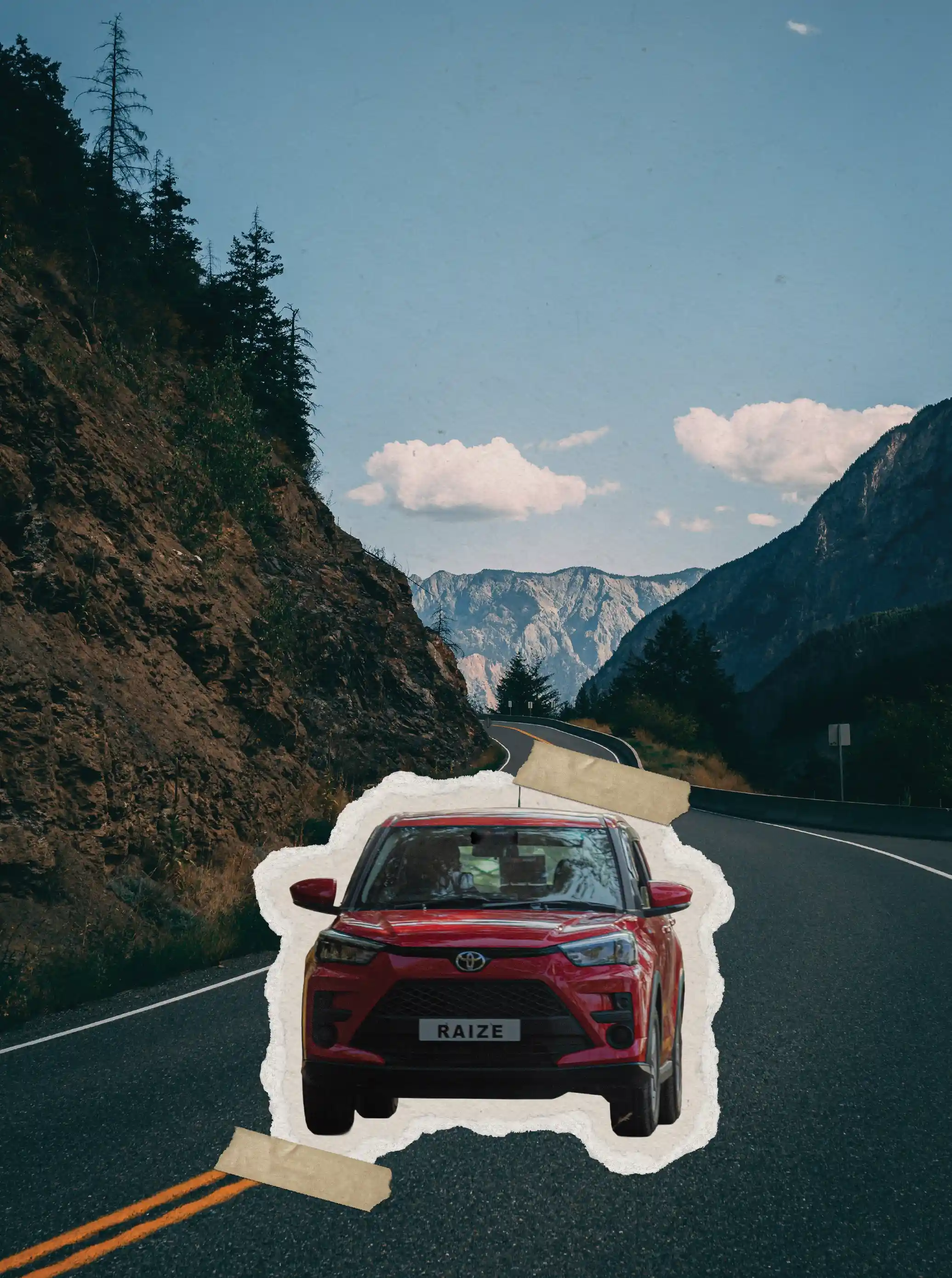
4. Road trip or camper holiday

There’s a reason people romanticise the road trip. The playlist starts before sunrise, the boot barely closes, and within a few hours of driving, the familiar roads give way to vineyards, mountains or coastlines. Somewhere between petrol stations and questionable service-area coffee, the holiday begins. Whether it’s a car packed with friends or a camper rolling slowly south bound through France, Italy or Croatia, this is freedom on four wheels.

Estimated footprint:
300 - 900 kg CO2 per person

Road trips sit firmly in the middle of the ladder. Unlike flying, the math changes dramatically depending on how many people come along. Drive alone, and emissions per person rise fast. Fill every seat, split the fuel, and the footprint starts looking far better. Campers add another twist: more fuel use, but fewer hotel nights.

Put into perspective:
A full car heading south can emit less per person than two separate short-haul flights.

This is where occupancy matters more than ideology. The same vehicle can be wasteful or relatively efficient depending on who’s inside it.

Rethink upgrade:
Fill the seats (ask friends or check BlaBlaCar), drive fewer kilometres, and stay longer in fewer places

3. Electric road trip

The road trip still works surprisingly well without an exhaust pipe. The scenery is the same, the snacks are the same, the arguments over directions still run entirely on renewable energy. The only real difference is that charging stops replace petrol stations. From the Netherlands into Germany, Austria or Denmark, Europe is increasingly built for electric travel.

Estimated footprint:
150 - 400 kg CO2 per person

Electric cars are not impact-free. Batteries need materials, electricity has a footprint, and high-speed motorway driving still uses plenty of energy. But compared to petrol or worse, diesel, emissions are usually far lower, especially when charged on cleaner grids.

Put into perspective:
Switching the same holiday from fossil fuel to electric can cut transport emissions by more than half.

It may not sound glamorous, but this is where climate gains often happen: not by cancelling the trip, but by changing the engine.

Rethink upgrade:
Charge overnight, avoid unnecessary detours, and bring passengers.

Just a seat by the window and the simple pleasure of watching the landscape change as you move through it.

2. European train holiday

You get to the station, grab a coffee, and walk straight onto the train. No security queue, no plastic bag for your toiletries, no arriving three hours early just to sit under fluorescent lights. Just a seat by the window and the simple pleasure of watching the landscape change as you move through it.

A few chapters in your book and you could be in Paris, Berlin, Prague. Take a night train and you might wake up near the beach or in the mountains. The journey stops feeling like wasted time and starts feeling like part of the trip, just the way we like it.

Estimated footprint:
30 - 150 kg CO2 per person

Rail is one of the most efficient ways to move people over land, especially on electrified routes. That makes trains one of the easiest climate wins in travel.

Put into perspective:
The same European trip can emit up to 90% less CO2 by train than by plane.

And unlike many sustainable choices, this one often feels like an upgrade.

Rethink upgrade:
Take the night train. You save a hotel night, wake up somewhere new, and lose almost no holiday time.

1. Local escape, cycling or staycation

Not every great holiday begins with a passport. Sometimes it starts with a bike lock clicking open, a short train ride to the coast, or finally booking that cabin an hour from home you’ve been talking about for years.

The pace changes almost straight away. No queues, no traffic and not feeling like you need to cross borders before it counts as a break. You’ve barely left, and already things feel lighter. Right?

Maybe it’s cycling for a couple of days, walking through nearby forests, or taking the train to the seaside with nothing planned beyond lunch.

Estimated footprint:
0 - 50 kg CO2 per person

At this level, transport emissions shrink dramatically or disappear almost entirely. Most of your footprint comes from food and accommodation, not getting there.

Put into perspective:
The emissions from one long-haul flight could equal dozens of local getaways.

Which raises an awkward possibility: perhaps distance was never the thing making holidays memorable.

Rethink upgrade:
Spend the money saved on travel on better food, better rooms, or hey, helping out someone else.

Know someone who deserves to be celebrated?

We're always looking for the next generation of pioneers. If you know someone doing extraordinary work — in food, fashion, design, or beyond — tell us about them.

Nominate a Pioneer
Stay in the loop

Join the revolution.

Our very best stories, insights and alternatives to overconsumption, every month in your mailbox. Subscribe now and join the reloved revolution!