
An early fascination with systems
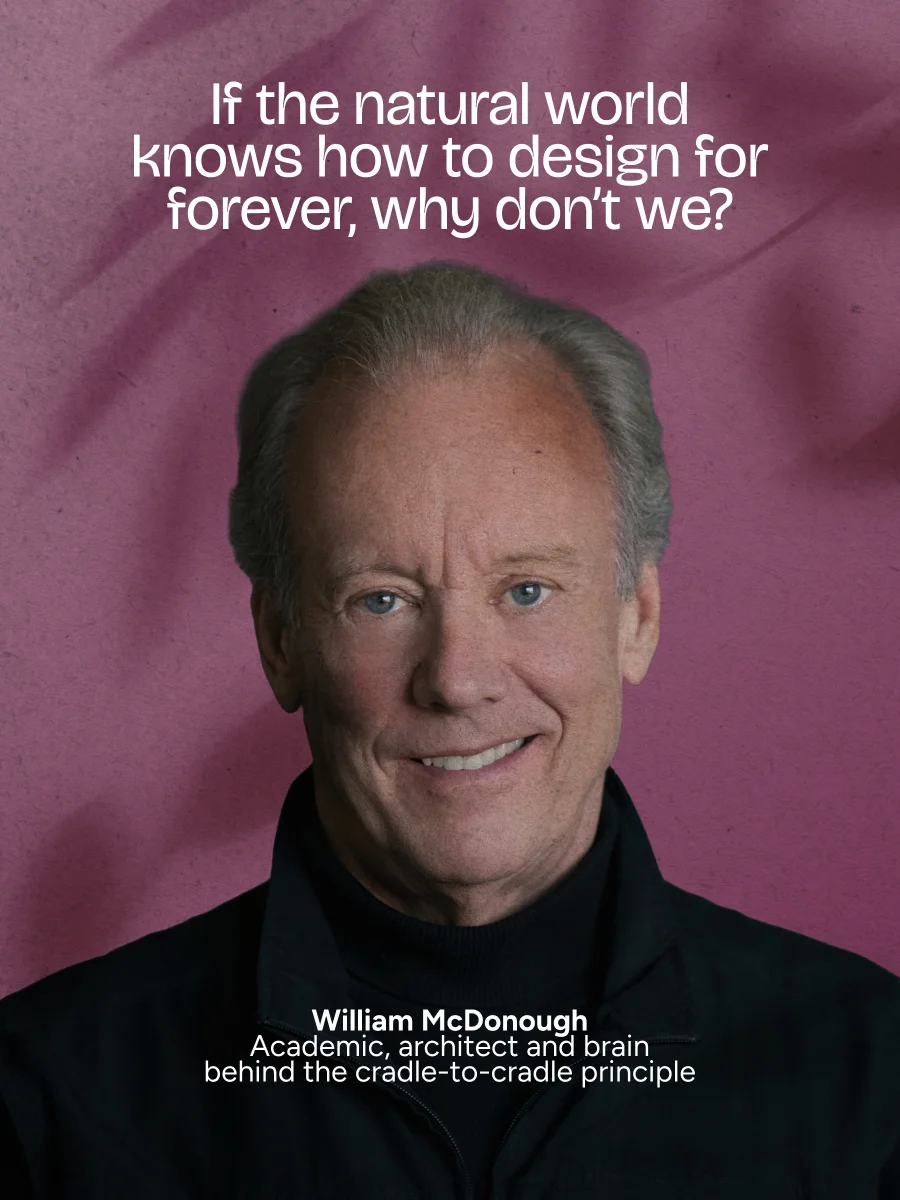
William McDonough’s career often gets summarized as ‘sustainable architecture,’ but the story begins long before sustainability became a discipline. Growing up in Japan and Hong Kong, he observed systems that operated on cycles: rituals that renewed themselves, systems that used everything, cities that regenerated without naming it ‘sustainability.’ Nothing was truly wasted; things became other things. It was an impression that stayed with him, even as he later trained as an architect in the United States.
By the time he began practicing professionally, McDonough was asking questions most designers weren’t yet asking. Why did buildings, products and materials have such short, linear lives? Why did we accept that the final chapter of nearly everything we create is a landfill? It wasn’t a question the architecture schools of the 1970s were prepared to answer. But McDonough kept asking it anyway. Because if the natural world knows how to design for forever, why don’t we?
Where others saw inevitability, he saw a design flaw.