
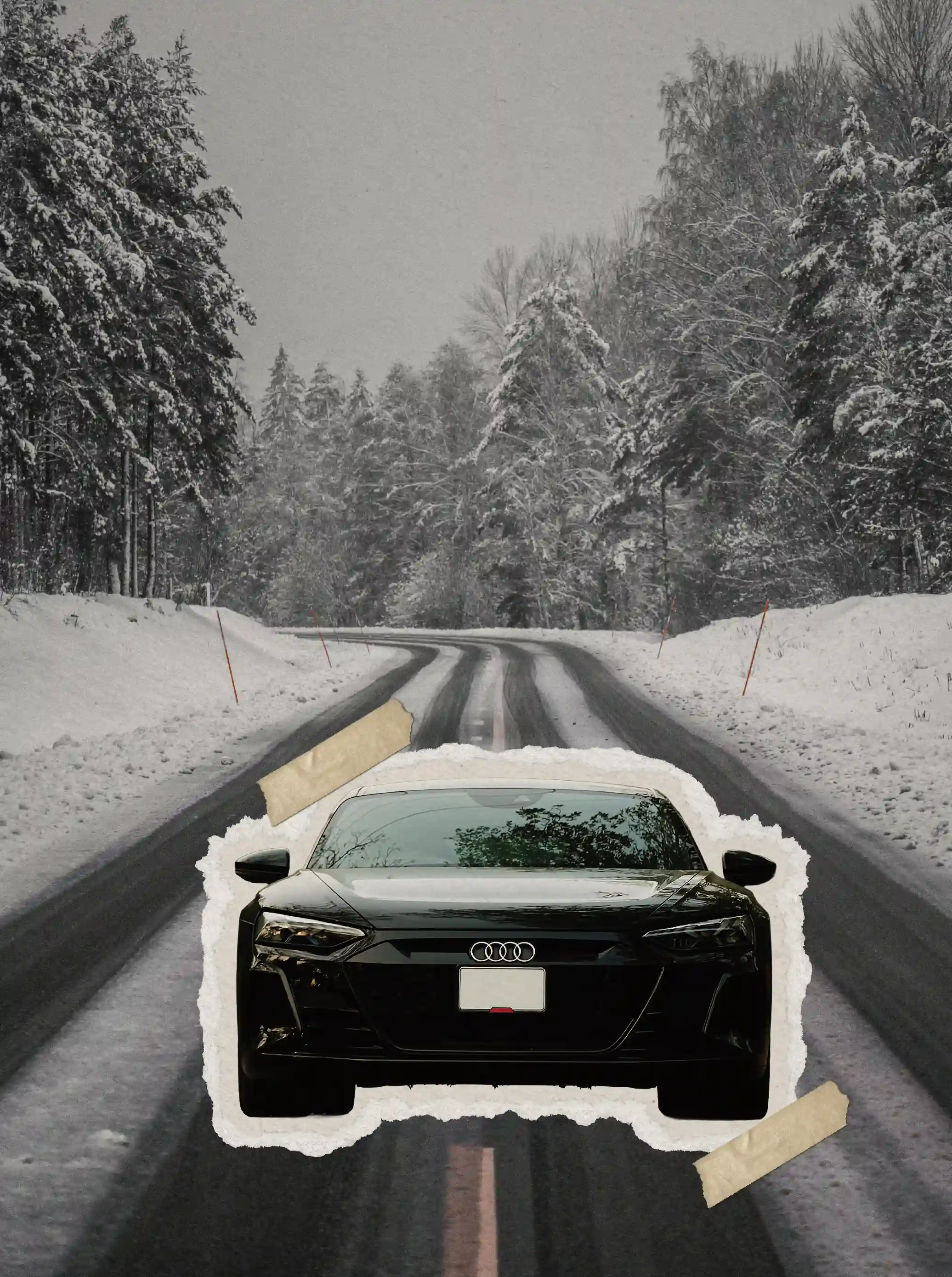
7 EV myths that deserve a closer look

Electric vehicles attract a remarkable number of confident opinions. Their batteries supposedly fail within a few years, they burst into flames without warning and they are only useful if your idea of a long journey is driving to the nearest supermarket.

Like most persistent myths, these stories often contain a grain of truth. EVs do create emissions during production, charging takes longer than filling a petrol tank and batteries lose some capacity as they age. The mistake is treating that one fact as the whole story.

Here are seven of the most common EV myths, what the evidence actually says and what it means if you are considering making the switch.

Myth 1: EVs are actually worse for the climate than petrol cars

Producing an electric car generally creates more emissions than producing a comparable petrol car, mainly due to the battery. So an EV starts its life with a larger carbon footprint. Thankfully, that is where much of its environmental disadvantage ends. Once the cars are on the road, the comparison begins to shift in the EV’s favour. An EV has no exhaust emissions and is much more efficient at converting energy into movement. Over its complete life cycle – including production, driving, energy generation and disposal – it usually produces considerably fewer greenhouse-gas emissions than a petrol or diesel car.

The exact difference depends on the size of the battery, where the car and battery were manufactured, how far it is driven and the source of electricity used to charge it. But even with those differences taken into account, the International Council on Clean Transportation estimates that battery-electric cars sold in the European Union today produce 73 per cent fewer life-cycle greenhouse-gas emissions than comparable petrol cars.

Battery production and mineral extraction still have environmental and social consequences. EVs are not impact-free, and replacing every large petrol car with an equally large electric one will not solve every transport problem. But ‘not impact-free’ is very different from ‘worse than petrol’.

Want to compare the estimated lifetime emissions of EV’s and petrol cars, considering your own driving behaviour? Fill out the calculator below.

[[EV-CARBON]]

TL;DR: EVs create more emissions during production, but typically make up for that difference while being driven.


If the comparison is between filling a petrol tank and charging an empty battery to 100 per cent, petrol wins easily. But that is not how most EV charging needs to work.

Myth 2: EVs cannot travel far enough on a single charge

There are EVs with limited range, particularly older and smaller models. There are also drivers who regularly tow a caravan across several countries and would find frequent charging genuinely inconvenient. Neither group represents every car or every journey.

Modern EVs commonly offer several hundred kilometres of official range. The distance achieved in practice depends on the model, speed, outside temperature, terrain and use of heating or air conditioning, so the brochure figure should never be treated as a promise.

Range also needs to be compared with the journeys people actually make. Most daily driving consists of relatively short trips, which can easily be covered by a modern EV. Long-distance trips usually involve stopping every few hours to charge, ideally while the people travelling are also eating, stretching or reconsidering how many snacks one journey really requires.

Cold weather, roof boxes and towing can all reduce range considerably. Anyone who regularly drives long distances in difficult conditions should therefore look beyond the official figure, not only the school run.

TL;DR: Most EVs have more than enough range for everyday driving. Long journeys may require charging stops, especially in cold weather or when towing.

Myth 3: Charging takes far too long

If the comparison is between filling a petrol tank and charging an empty battery to 100 per cent, petrol wins easily. But that is not how most EV charging needs to work. An EV can charge while it is parked at home, at work, outside a supermarket or overnight at a hotel. The driver does not necessarily have to stand beside it and wait. For people with access to home charging, this can mean leaving most mornings with enough energy for the day rather than visiting a fuel station.

On longer journeys, fast chargers can add a substantial amount of range during a normal toilet and coffee break. How quickly that happens depends on both the charger and the car. A 250 kW charger cannot make a car charge at 250 kW if the vehicle itself can only accept 100 kW. Charging also tends to slow as the battery fills, which is why journey planners often recommend charging to around 80% and continuing, rather than waiting for the final few percentage points.

The public charging network is growing quickly. According to the International Energy Agency, Europe had more than one million public charging points in 2024, an increase of over 35% in a year. That does not mean charging is equally convenient everywhere. Infrastructure remains unevenly distributed, chargers can be occupied or out of service and the number of apps, passes and payment systems can make the experience more complicated than it needs to be.

TL;DR: Charging takes longer than refuelling, but much of it happens while the car is parked anyway. On long journeys, the car’s charging speed and the available infrastructure matter as much as battery size.

Myth 4: An EV battery needs replacing after a few years

The battery in a phone may feel noticeably tired after a few years, so it is understandable that people expect the same thing to happen to an electric car. The comparison overlooks the much more sophisticated temperature management and battery-protection systems used in EVs.

An EV battery will gradually lose some of its original capacity. This is known as degradation. It does not usually mean the battery works perfectly one day and needs replacing the next. Instead, a car that could originally travel 400 kilometres may cover slightly less as it ages. Driving and charging habits can affect that process. Prolonged exposure to extreme heat, regularly leaving the battery completely full or empty and frequent fast charging may accelerate degradation. The chemistry and cooling system used by the car also make a difference.

The US Department of Energy’s Alternative Fuels Data Center states that current EV batteries may last around 12 to 15 years in moderate climates and 8 to 12 years in extreme climates. Many manufacturers also provide a separate battery warranty, often covering eight years or a specified number of kilometres. Of course, individual failures can still happen, just as engines and gearboxes sometimes fail. A replacement battery is expensive, so warranty conditions matter. But routine battery replacement after a few years is not a normal part of EV ownership.

TL;DR: EV batteries gradually lose capacity, but they are designed to last for many years and are built to last as long as the car.

The growing availability of battery information is making used EVs easier to assess.

Myth 5: Buying a used EV is a gamble

A used EV asks different questions than a used petrol car. That does not make it unknowable. Mileage, age and maintenance history still matter, but battery health deserves particular attention. A State of Health report estimates how much usable capacity remains compared with when the battery was new. A car with 90 per cent State of Health has not ‘used up’ 90 per cent of its battery; it retains roughly 90 per cent of its original usable capacity.

Ask whether a battery-health report or independent test is available. Check the remaining battery warranty and whether it transfers to a new owner. During a test drive, look at energy consumption and estimated range, although neither provides a complete battery diagnosis on its own. Charging speed matters too. An older EV may have enough range for daily use but charges too slowly for the long trips you plan to make. That is a limitation of the model rather than evidence that the car is about to fail.

The growing availability of battery information is making used EVs easier to assess. Some OLX marketplaces already show battery capacity, charging specifications or verified State of Health information where available. That allows buyers to compare cars on something more meaningful than mileage and a seller’s assurance that the battery has ‘always been fine’.

TL;DR: A used EV is not automatically a risky purchase. Battery health, remaining warranty, realistic range and charging speed simply need to become part of the normal buying checklist.

Myth 6: EVs are always more expensive

Despite many governments offering purchase grants, many new EVs still cost more to buy than comparable petrol cars. That is a real obstacle, particularly for drivers shopping in the more affordable parts of the market. The purchase price is not the total cost of owning a car, however. Electricity can cost less per kilometre than petrol or diesel, especially when charging at home on a suitable tariff. Electric motors also contain fewer moving parts, removing maintenance jobs such as oil changes and reducing the number of mechanical components that can wear out. And EV’s often receive tax cuts.

Those savings are not identical for everyone. Drivers who rely on expensive public rapid charging may save much less on energy. Insurance, taxes, subsidies and electricity prices differ between countries. Depreciation can work against the owner of a new EV, although it creates attractive prices for someone buying the same car second-hand.

The fairest comparison therefore includes:

  • Purchase price and depreciation
  • Home and public charging costs
  • Insurance and taxes
  • Expected maintenance
  • Annual mileage
  • The period you expect to own the car

An EV can be cheaper over its complete ownership period without being cheaper on the day you buy it. It can also be the wrong financial choice for a particular driver. Any universal claim in either direction leaves out too much.

Use the calculator below to determine the total cost of ownership for your particular situation.

[[EV-COST]]

TL;DR EVs can cost more upfront but are generally cheaper to run. Whether one is cheaper overall depends heavily on the car, charging situation and annual mileage.

Myth 7: EVs catch fire more easily

EV fires receive a great deal of attention, partly because battery fires behave differently from fires involving petrol or diesel. A damaged lithium-ion battery can enter thermal runaway: a chain reaction in which cells continue generating heat. These incidents can be difficult to extinguish and require specific procedures from emergency services. But difficult to extinguish does not mean more likely to happen.

The available evidence does not suggest that electric cars catch fire more frequently than petrol or diesel cars. The UK government notes that some international studies have found EV fires to be less common. Norwegian data, for example, showed petrol and diesel vehicles involved in proportionally four times as many fires as EVs between 2016 and 2021. Those comparisons are not always straightforward. Electric cars tend to be newer than the overall petrol and diesel fleet, reporting methods vary and the number of EVs on the road is still smaller. It would therefore be unwise to turn limited evidence into the claim that battery fires are harmless.

The sensible conclusion is narrower: EVs can catch fire and those fires present particular challenges, but there is no good evidence that they routinely burst into flames or pose a greater everyday fire risk than fossil fuel cars.

TL;DR Battery fires require special handling, but EVs do not appear to catch fire more frequently than petrol or diesel cars.

The more nuanced truth

EVs are not perfect cars waiting for better public relations, they have genuine limitations. Charging infrastructure remains patchy in some places, public charging can be expensive, battery production has societal consequences and an EV may be inconvenient for someone who regularly tows long distances. The myths arise when those limitations are turned into universal rules.

An EV does not suit every driver, but neither does a diesel estate, a small city car or the sports car somebody bought shortly before discovering they needed to transport three children and a folded pushchair. The useful question is therefore not whether every criticism of EVs is false, but whether a particular electric car fits your journeys, budget and access to charging. Once you replace the familiar myths with those practical questions, choosing a car becomes considerably less dramatic.

Know someone who deserves to be celebrated?

We're always looking for the next generation of pioneers. If you know someone doing extraordinary work, in food, fashion, design, or beyond, tell us about them.

Nominate a Pioneer
Stay in the loop

Join the revolution.

Our very best stories, insights and alternatives to overconsumption, every month in your mailbox. Subscribe now and join the reloved revolution!